Pellet Stove Chimney Cleaning: DIY vs Pro (2026 Costs)
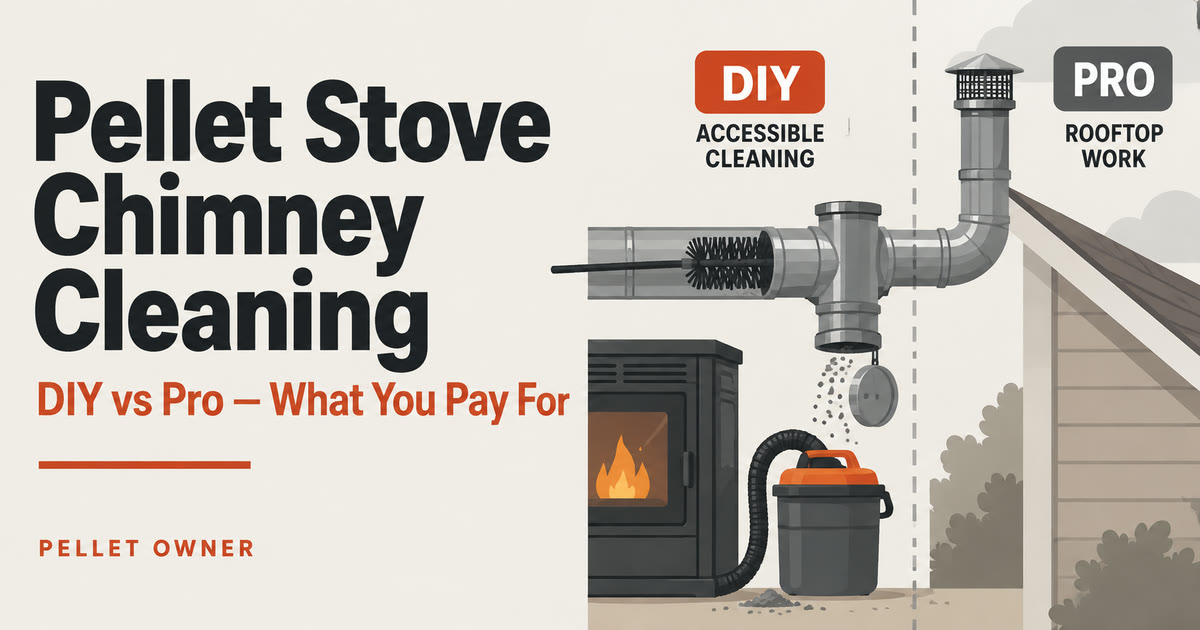
“It’s just pellets, it burns clean, the chimney doesn’t really need cleaning” — it’s a common belief on the forums, and it’s the one that ends heating seasons early. Pellet stoves push exhaust out under power through a sealed vent, and that vent packs with fine fly ash whether the fuel looks clean or not. Left alone, it chokes draft, trips shutdowns, and — worst case — becomes a fire and carbon-monoxide risk.
The real questions aren’t whether to clean it but who does what: which parts you can safely handle yourself, what you’re actually paying for when a pro comes, and what that costs in 2026. Here’s the owner’s-eye breakdown the price-quote sites can’t give you.
Why pellet chimneys still need cleaning
Pellet exhaust isn’t soot-free — it’s fly ash, a fine powdery residue that forced draft carries into the vent and deposits on the walls, especially at bends and the termination cap. Sweeps and owners widely report that it builds faster than people expect, and it does two things: it narrows the vent (choking the draft your stove depends on) and, combined with any unburned residue from poor combustion, it can contribute to a flammable layer in the system.
When the vent gets restricted, the stove tells you before it’s dangerous — usually as a stove that keeps shutting off as its draft-sensing safety trips, or a smell of smoke that means exhaust isn’t leaving cleanly. Both are your cue that the vent, not just the firebox, needs attention. And because we’re talking about combustion exhaust and CO, this is the part of the machine where “I’ll get to it” is the wrong instinct.
What a professional cleaning actually covers
This is where owners overpay or underpay without knowing it, because “chimney cleaning” sounds like one guy with one brush. A proper annual pellet service is more than a vent sweep — based on what sweeps commonly describe, a full visit typically includes:
- Emptying and vacuuming the stove of pellets and ash.
- Sweeping the vent/liner — brushing the exhaust pipe and any chimney liner end to end, not just the visible stub.
- Cleaning the blowers — the combustion blower (the one that makes draft) and the convection/room blower, both of which cake with fly ash and lose efficiency.
- Clearing the internal passages — the heat exchanger and the smoke passages behind the baffles, where ash insulates and steals heat.
- Inspecting gaskets, the hopper, switches, and the venting connections for leaks or damage.
That’s the honest value of the service: it’s a combustion-system cleaning and inspection, not a token brush. When you know what’s on the list, you can tell whether a quote covers the whole job or just the pipe.
What it costs in 2026
Prices vary by region, vent length, and access, and the published ranges vary with them. Treat these as ballpark figures for September 2026, not quotes:
| Source | Quoted range |
|---|---|
| Fixr — pellet stove chimney cleaning | $175–$350 |
| Fixr — annual maintenance / deep clean | $150–$300 |
| HomeGuide — wood & pellet stove | $130–$300 |
| HomeGuide — chimney sweep (general) | $150–$375 |
| Golden Gate Chimney | $200–$300 |
Most quotes land somewhere in the low-to-mid hundreds. What moves you within the range: a long or multi-story vent costs more than a short horizontal run; roof access adds labor; and a stove that’s been skipped for a couple of seasons is a bigger job than one on a yearly schedule. Bundling the inspection with the cleaning (most do) is cheaper than paying for each separately.
The DIY portion: what an owner can safely clean
Plenty of the annual cleaning is genuinely owner territory, and doing it keeps the pro visit shorter. With the stove shut down from its controls, completely cold, and unplugged, and working outdoors where the ash cloud belongs:
- The firebox side — burn pot, ash pan, heat exchanger, and the passages your manual shows behind removable baffles or firebricks. (That’s the deep clean.)
- The vent pipe itself — and this surprises people: the manuals actually design pellet vent to come apart for cleaning. Englander’s 25-PDV manual says the pellet pipe “is designed to disassemble for cleaning” and should be checked several times a season; PelPro notes its annual venting service “may require disassembly of venting to ensure proper cleaning.” So brushing the run and separating pipe sections at the joints to clean them is owner work — with the stove cold and the ash caught outdoors. A 3” or 4” pellet-vent brush on a rod plus an ash vacuum (a shop vac with a fine-dust filter, never a household vacuum — fly ash blows straight through it, and a stray ember is a fire) is the kit.
- Routine inspection — your manual puts this on your list too: PelPro has you check the door gasket periodically and, annually, remove the termination cap and inspect for debris and blockage; Englander has you inspect the exhaust pipes and says the system should be looked at at least yearly. A bird’s nest in the cap after summer is a classic find.
Do this at the start of the season and you’ve handled the routine ash and the yearly look-over. A basic rod-and-brush kit plus an ash vacuum runs well under the cost of a single pro visit and lasts years.
Where DIY stops
Cleaning and checking the vent is yours; here’s where I hand off, and think you should too:
- Anything requiring roof or ladder work. Vertical runs and rooftop terminations are a fall risk and an access problem — that’s the pro’s job even though the cleaning itself is “owner” work at ground level.
- Repair, re-routing, or modification of the venting (as opposed to cleaning it). This is the fire-safety-critical part of the appliance and not a place to improvise.
- Expert inspection and judgment calls. Your routine look-over spots the obvious — a blocked cap, an ash-packed tee, a torn gasket. Judging whether a liner is corroded or a section is failing, or answering a clearance/code question, is the certified sweep’s eye, and it’s worth paying for once a year.
None of that is me being squeamish — it’s that the exhaust system is the one part where a mistake vents combustion gases into your house. The savings aren’t worth it.
How often
Both the standards bodies and the manuals point the same direction:
- CSIA, citing NFPA 211, says chimneys, fireplaces, and vents should be inspected at least once a year, with cleaning, maintenance, and repair done as needed based on that inspection. For a pellet stove that translates to: get eyes on the whole venting system every year, and clean it whenever the inspection says it’s due — which, given how forced draft packs the pipe with fly ash, is usually every season. (csia.org / NFPA 211, 2026)
- Your stove’s manual sets the firebox-side interval, and those genuinely differ — a Harman P43 schedules a thorough cleaning after each ton of pellets, a P61 every 2–5 tons, while Englander and PelPro use day/week/month calendars. Run two clocks: your manual’s calendar and your tons-burned count, and obey whichever comes first. (The full breakdown is in the deep clean guide.)
Simplest version: DIY the routine ash on your manual’s schedule, and book the full professional service once a year.
Hiring right: what to ask a sweep
You’re paying for competence on a fire-safety system, so screen for it:
- Certification. Look for CSIA or NFI credentials — the same certifications the standards bodies point to.
- What’s included. Confirm the quote covers the full service (vent, blowers, internal passages, inspection), not just a vent brush. Now that you know the list above, you can ask specifically.
- Pellet experience. Pellet venting isn’t a masonry wood chimney; make sure they service pellet appliances, not only fireplaces.
- A written summary. A good sweep leaves you notes on what they found — gasket wear, liner condition — which is half the value of the inspection.
FAQ
How much does it cost to clean a pellet stove chimney? Expect roughly $130–$375 for a professional service in 2026, with most quotes landing in the $150–$350 range. Vent length, roof access, and how long it’s been since the last cleaning move you within that spread.
Can I clean my pellet stove chimney myself? Yes, a good part of it. The manuals actually design pellet vent pipe to come apart for cleaning, so brushing the firebox and the vent run — stove cold, ash caught outdoors — plus your manual’s routine inspection are owner jobs. What belongs to a certified sweep: roof or ladder work, any repair or re-routing of the venting, and expert judgment on the venting’s condition.
How often should a pellet stove chimney be cleaned? Get it inspected at least once a year (CSIA, citing NFPA 211) and cleaned as that inspection dictates — which, with a regularly used pellet stove, usually means every season. Handle the routine firebox ash on your manual’s schedule (often tracked by tons burned) in between.
Is pellet stove chimney cleaning really necessary if pellets burn clean? Yes. “Clean-burning” still produces fine fly ash, and forced draft packs it into the vent — restricting draft (which trips shutdowns) and building a fire and CO risk over time. Burning clean doesn’t mean venting stays clean.

Walt Hensley — Walt Hensley is the pen name of Pellet Owner’s editor. I’m not an NFI-certified technician, and I don’t sell stoves, pellets, or parts. Every guide here starts from the manufacturers’ owner’s and service manuals, is cross-checked against what owners consistently report, and says which is which — including what you can safely check yourself and when it’s time to call a certified technician.