Maintenance
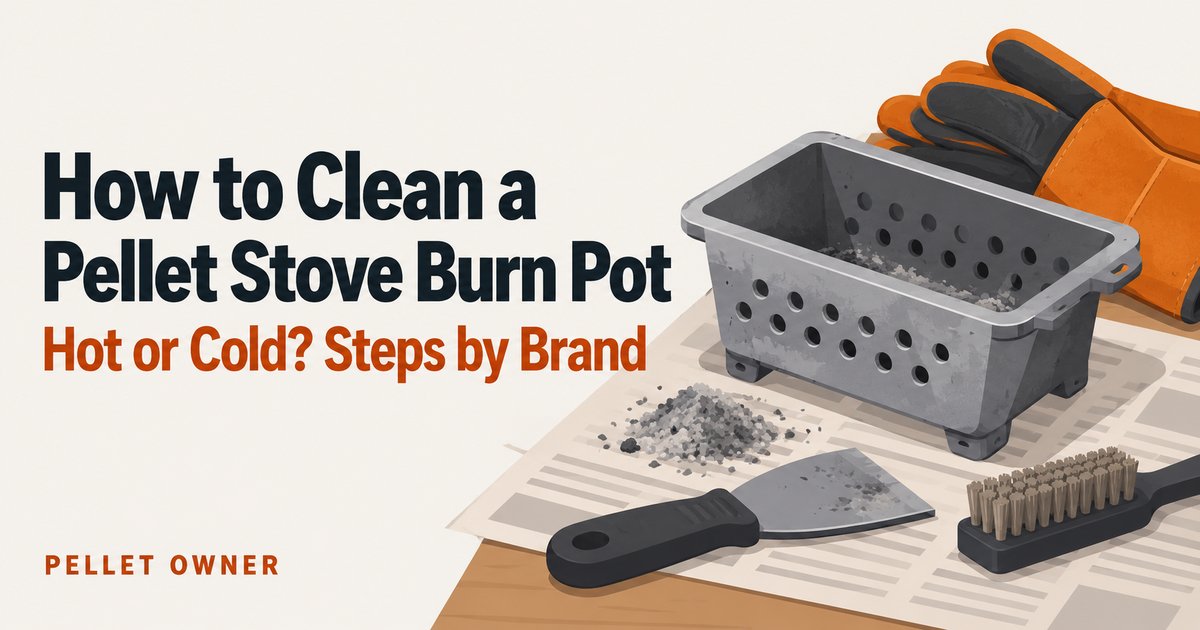
How to Clean a Pellet Stove Burn Pot: Hot or Cold, by Brand
Some manuals let you scrape a live burn pot; PelPro wants it off and cold. Brand-by-brand steps, the tools for the air holes, and how often to do it.
Practical guides for pellet stove owners — troubleshooting by symptom, error codes by brand, cleaning schedules, and real running costs. From the owner’s side, not the showroom.
Some manuals let you scrape a live burn pot; PelPro wants it off and cold. Brand-by-brand steps, the tools for the air holes, and how often to do it.
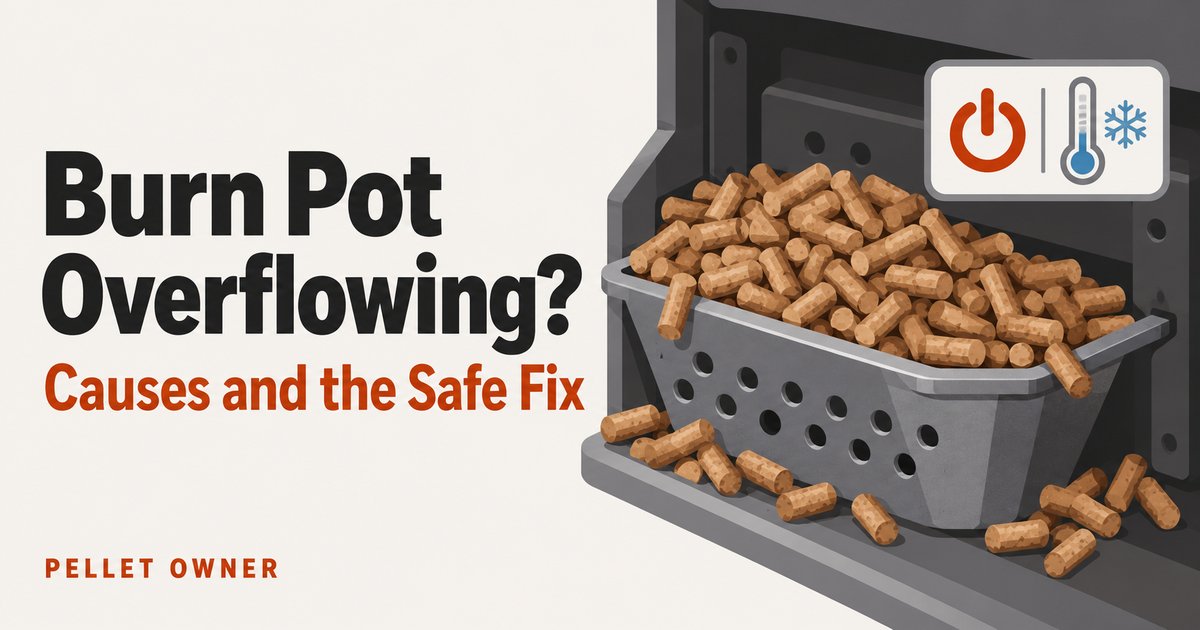
A burn pot full of pellets means fuel is outpacing the fire. Tell a failed start from overfeeding, clear it safely, and set the feed right for your stove.
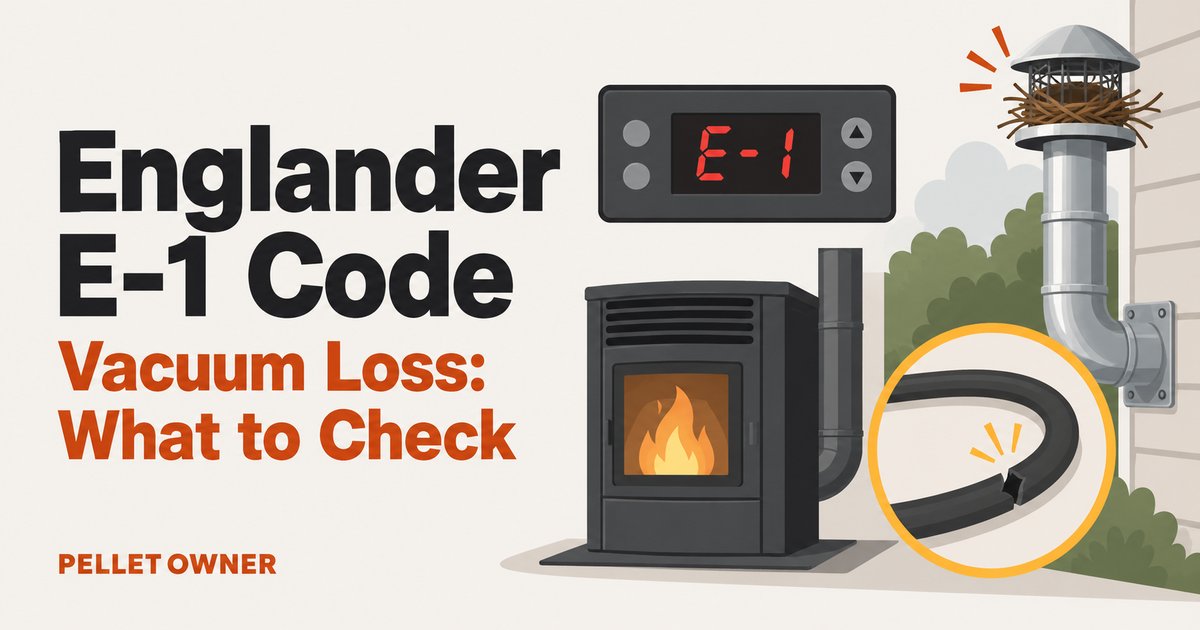
E-1 on an Englander 25-PDV or 25-PDVC means Vacuum Loss. The manual's causes, what's safe to check yourself, the one-press reset and when to call support.
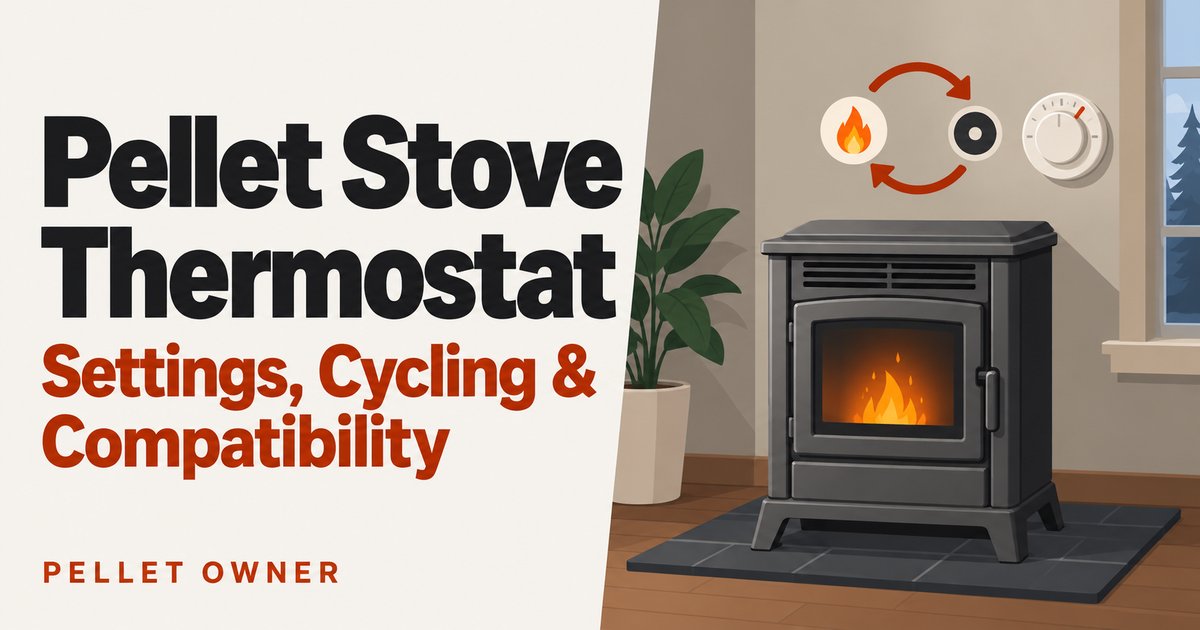
Why your pellet stove turns itself on and off, which settings change that, and which brands accept a wall thermostat (and which don't), from the manuals.
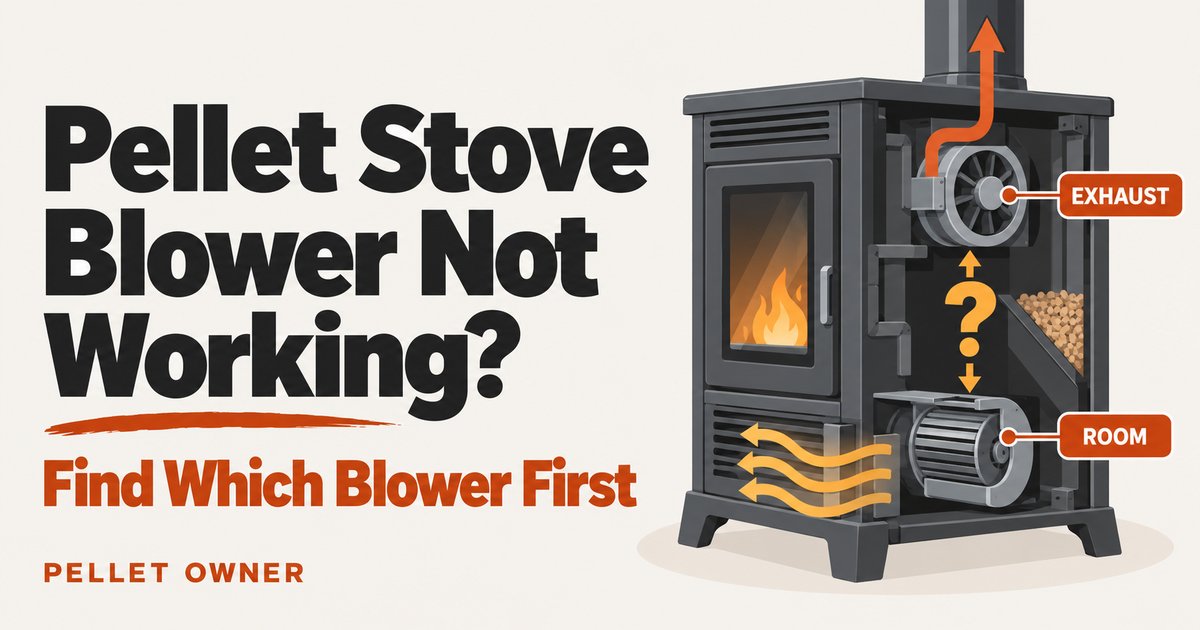
Two blowers, two problems: a dead exhaust blower stops the stove; a quiet room blower may just be waiting for heat. Manual-backed checks by brand.
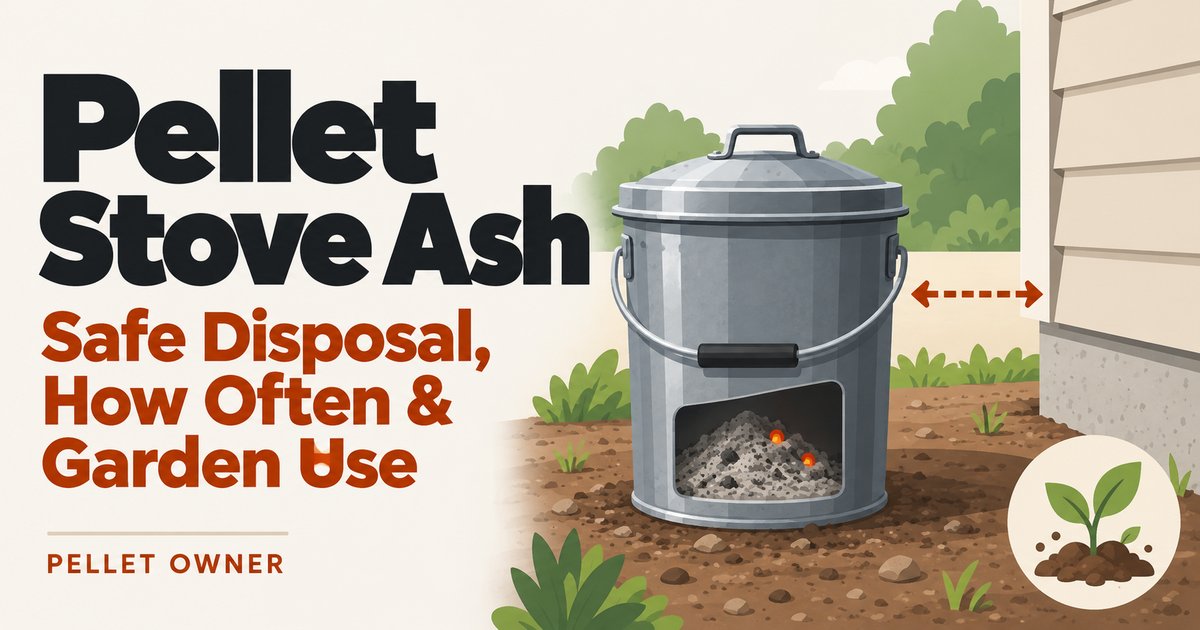
Pellet ash can hide live embers for days. The safe way to empty and store it, how often each brand says to empty it, and how much the garden can take.
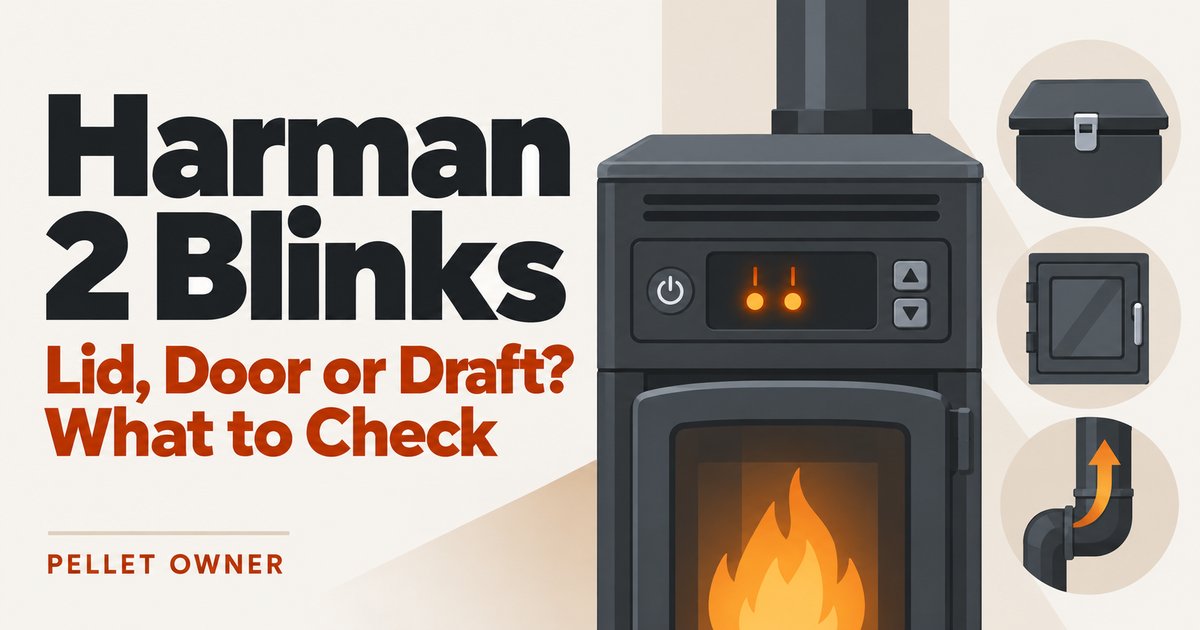
Two blinks on a Harman means an open feed circuit, typically the draft or hopper switch. Which boards use the code, what to check, what's dealer work.
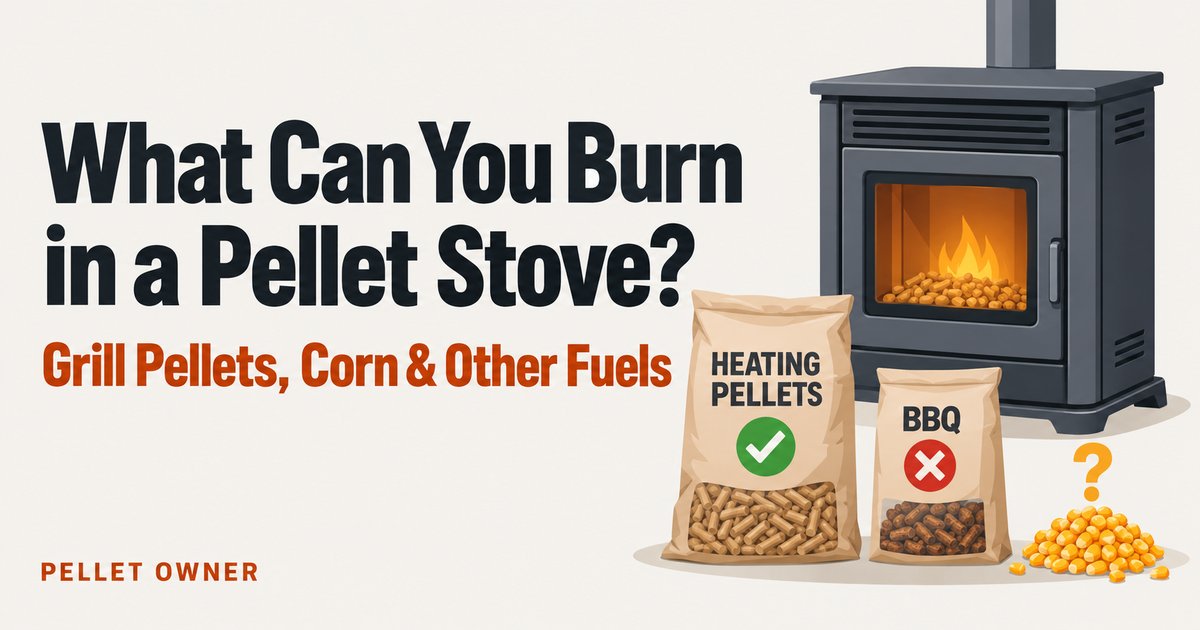
Grill pellets, corn, horse bedding: what pellet stove manuals allow, what they ban, and why the wrong fuel can void the warranty or start a hopper fire.
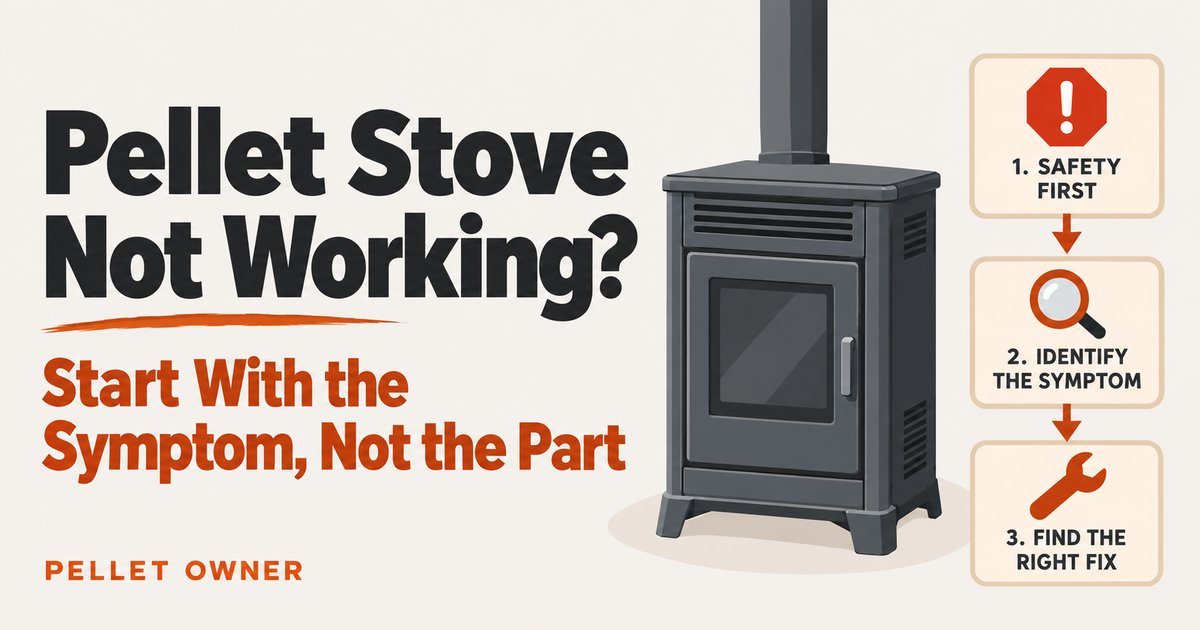
Not working, won't light, shuts off, smoke? Triage your pellet stove by symptom, read Harman, Englander and PelPro codes, and know when to stop and call.
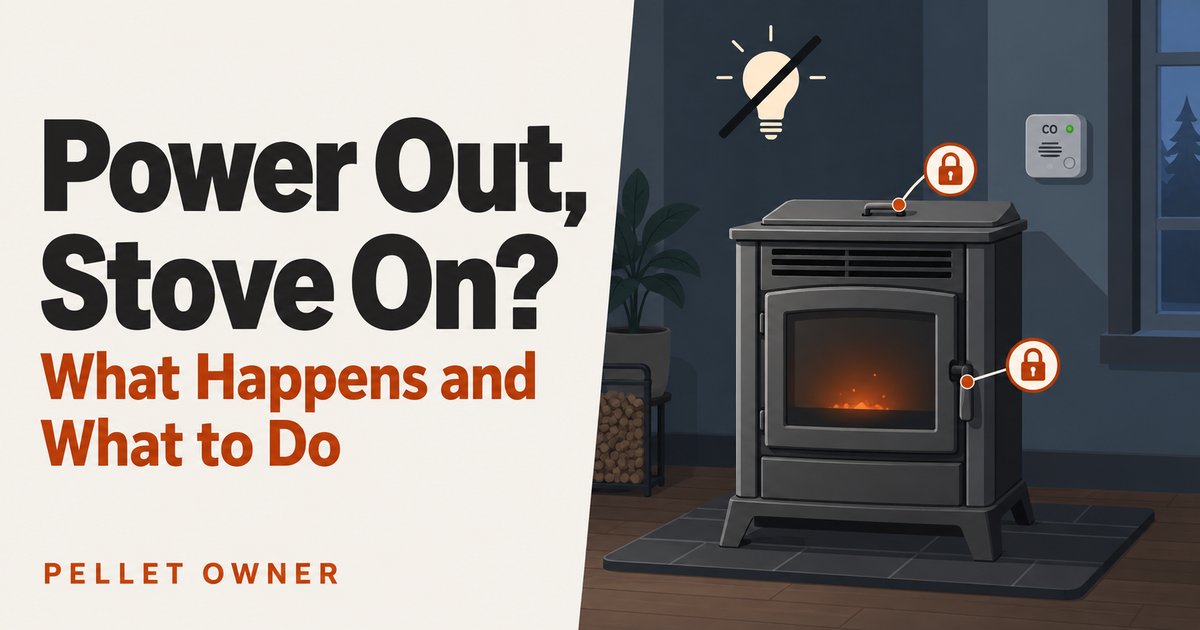
When the power goes out, the auger and blowers stop and smoke can leak in. What to do in the first minutes and what your stove does when power returns.
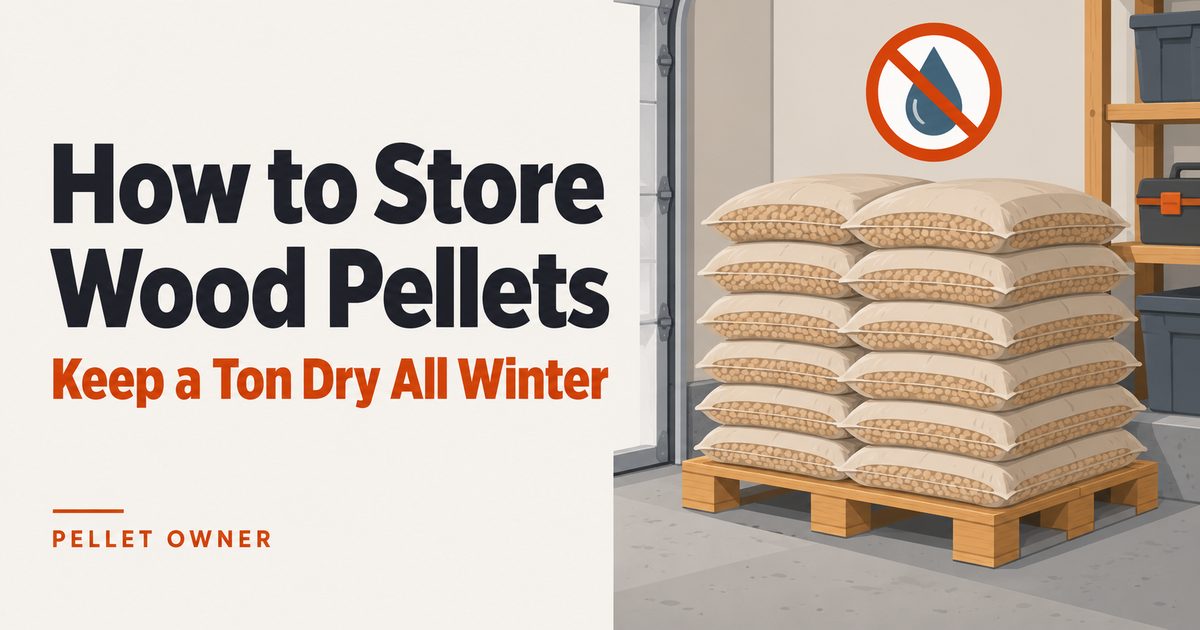
What stove manuals actually say about storing pellets: garage vs basement vs outside, how to spot damp bags, and whether to empty the hopper for summer.
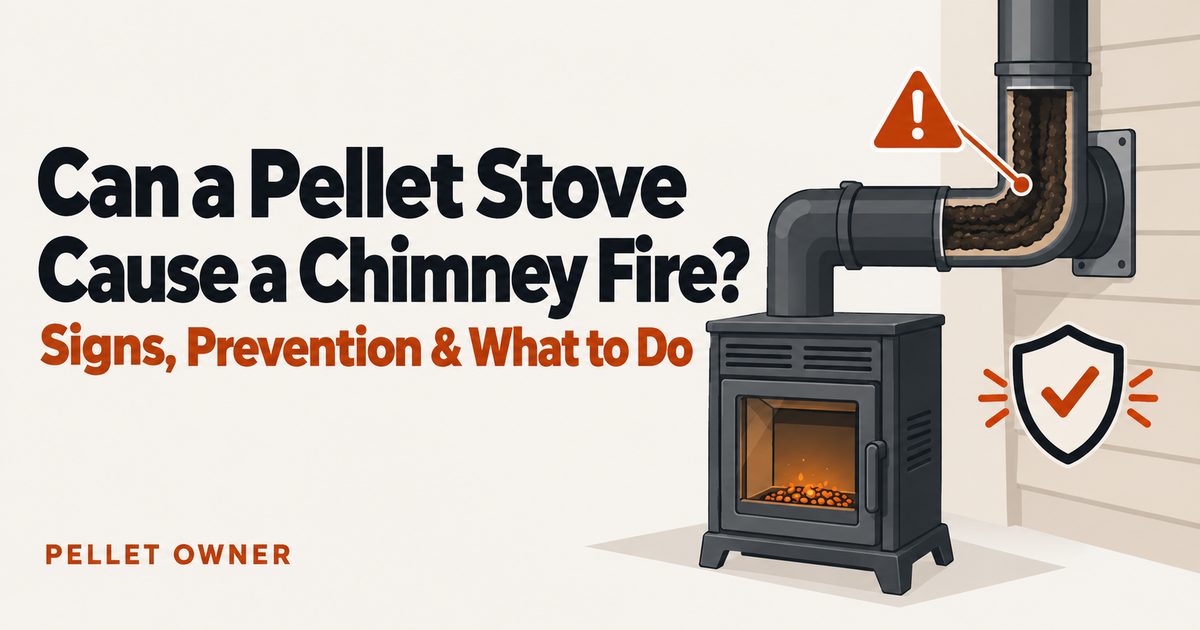
Yes: pellet vents can build creosote. What the manuals say, the warning signs of a chimney fire, what to do (and not do), and how to prevent one.
Blowers still running after you hit OFF is usually normal. How long shutdown takes by brand, the signs of a real fault, and why you shouldn't unplug it.
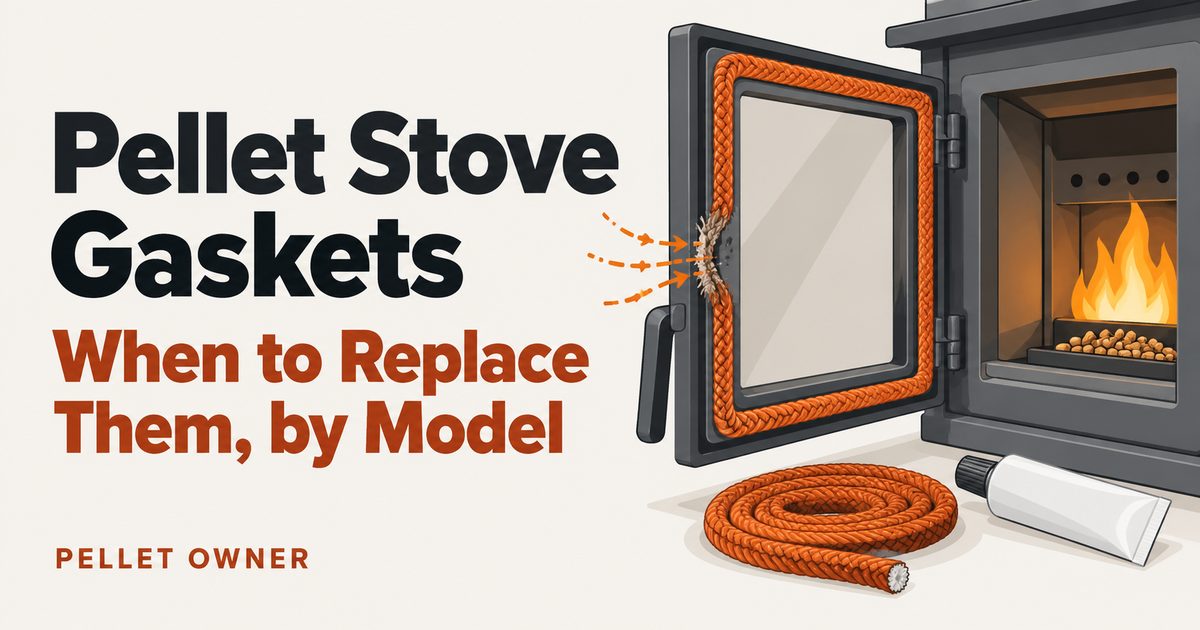
How to tell if your pellet stove's door, glass, hopper or ash pan gaskets are worn, what each brand's manual requires, and how to replace one cold.
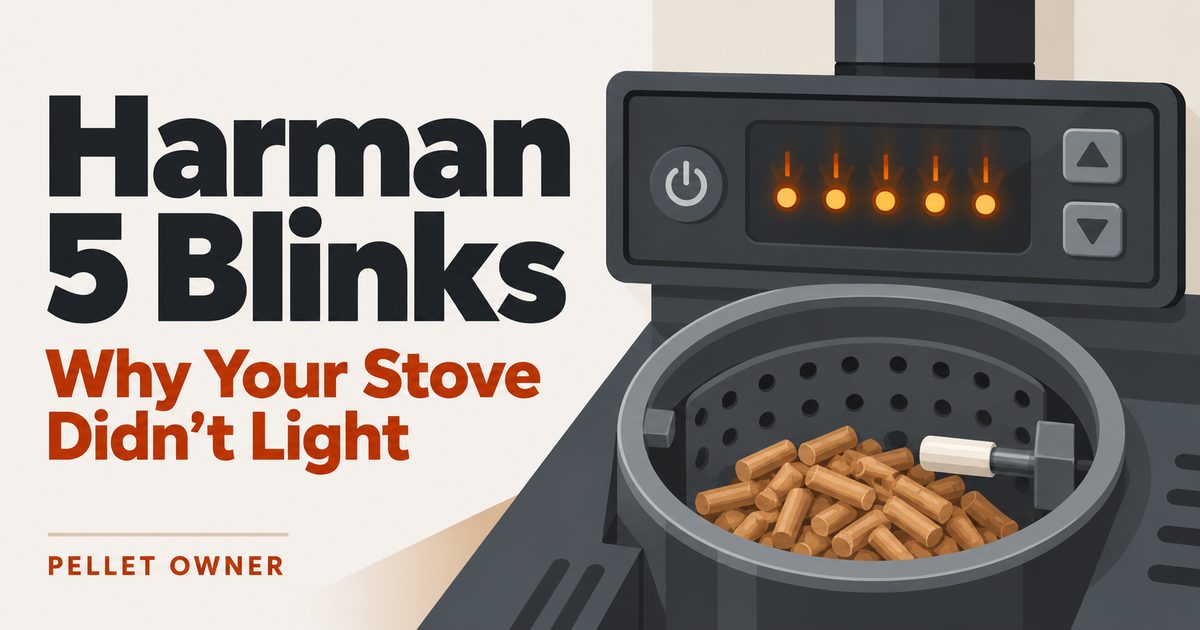
Five blinks on a Harman means it failed to light in its 36-minute start cycle. Look in the burn pot first: empty or full tells you where the fault is.
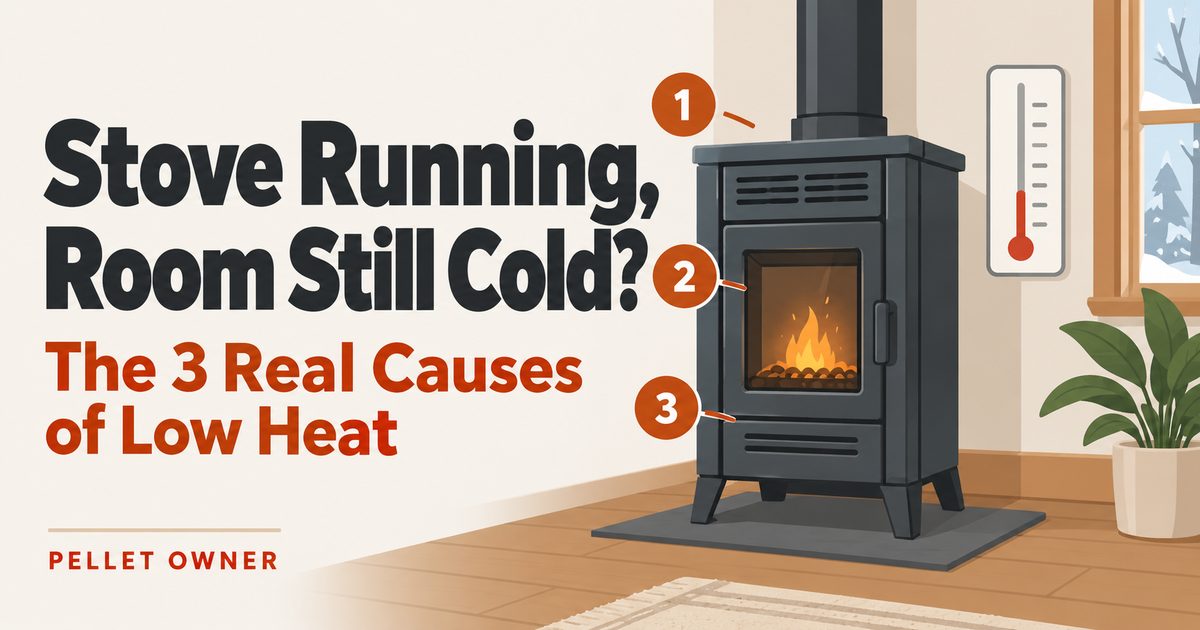
Weak fire, heat stuck in the stove, or a stove too small for the space? Triage it in a minute, then fix it with what your manual actually says.
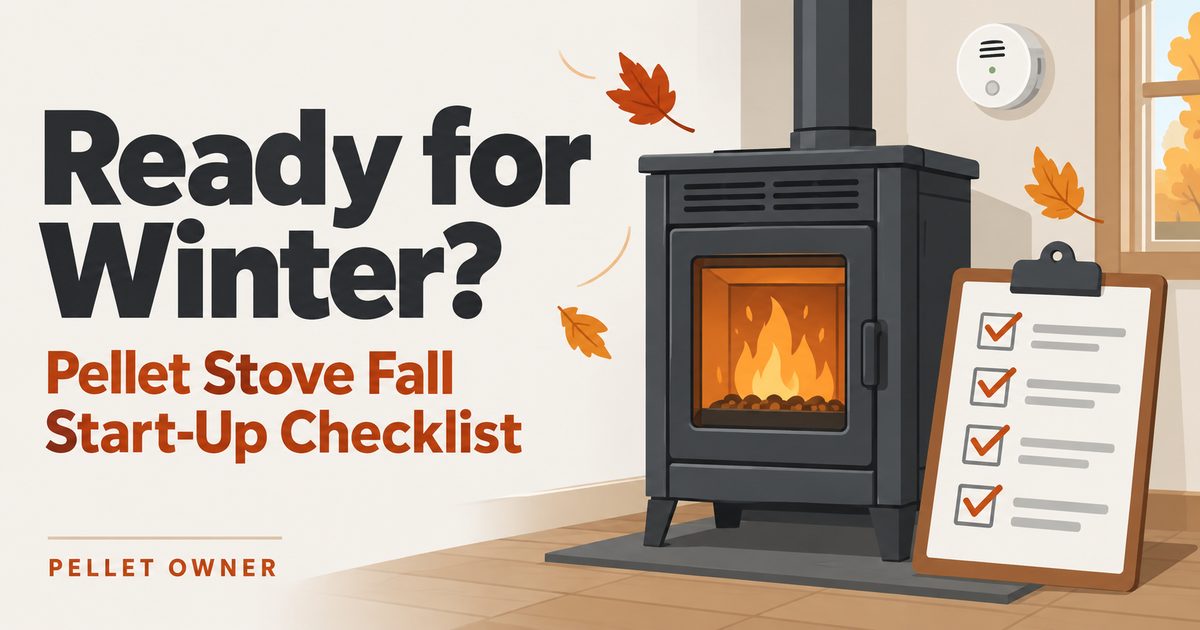
Summer leaves damp pellets, nests and tired gaskets behind. The manual-backed checks before your first fire, and what's normal on that first burn.
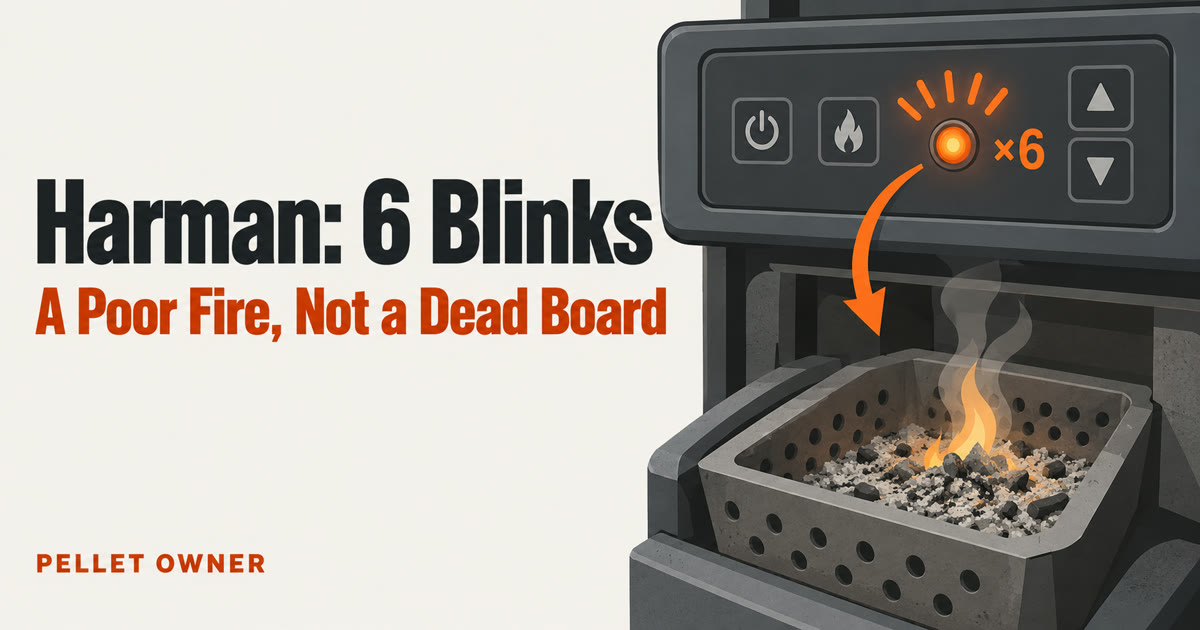
Six blinks on a Harman status light means poor or incomplete combustion. What it means on your generation, what to clean first, and when to call.
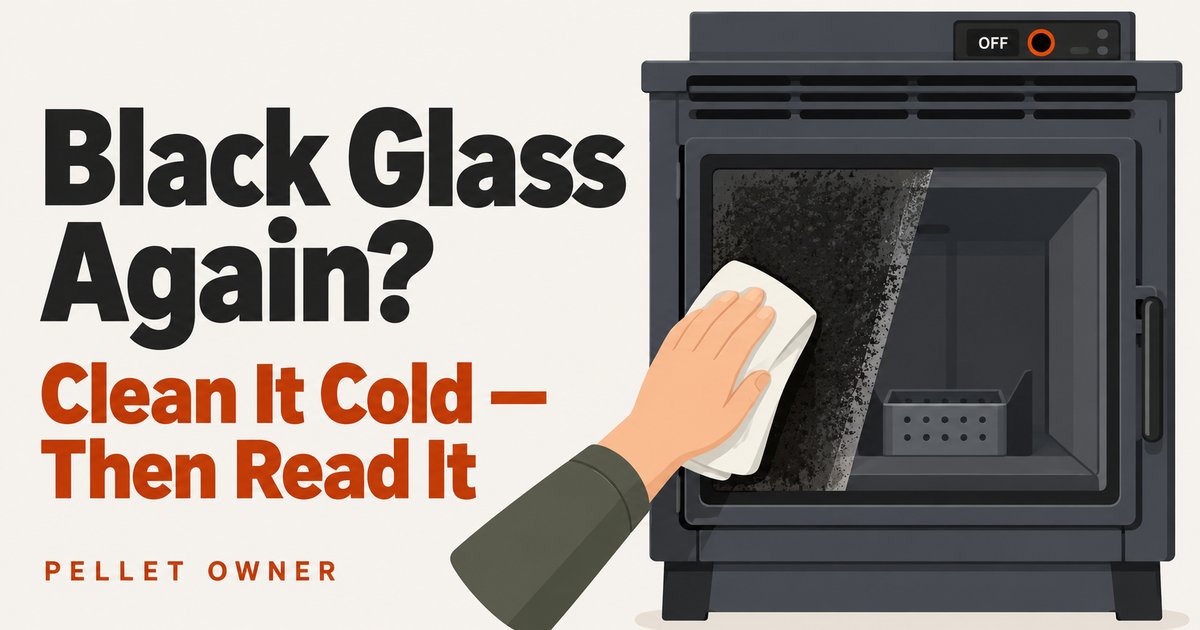
Clean the glass cold, with a non-abrasive cloth and the cleaner your manual names — and read the soot: glass that blacks over in days is a combustion problem.
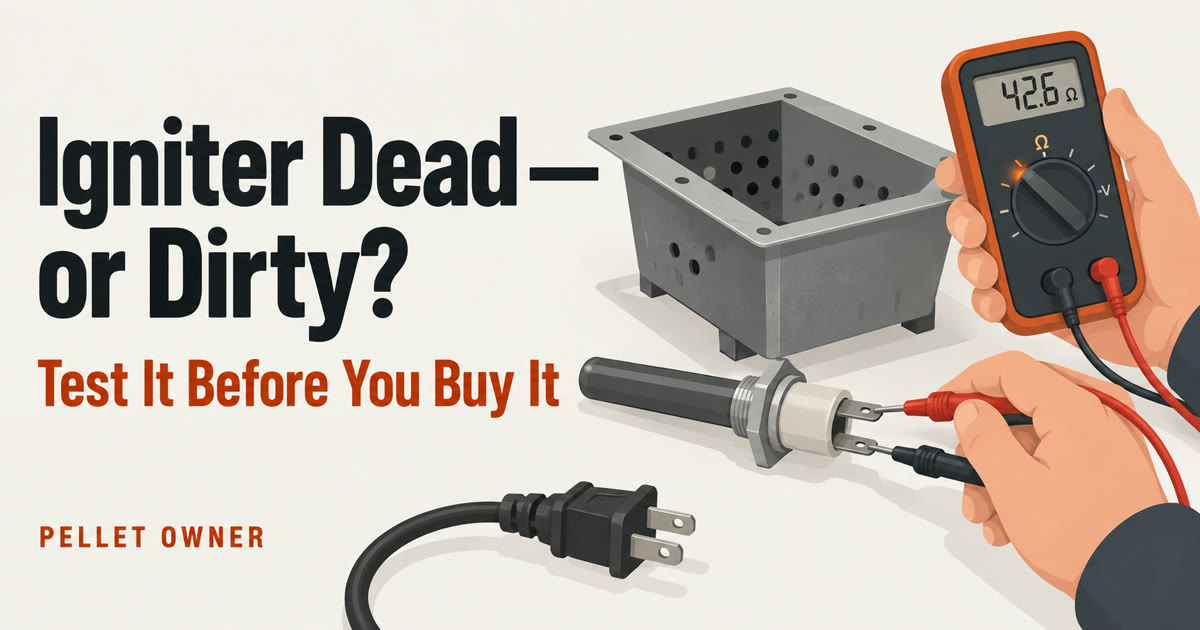
Owners often find a "bad igniter" is really ash or airflow. How to rule those out, confirm a dead igniter with a multimeter, and what replacement involves.
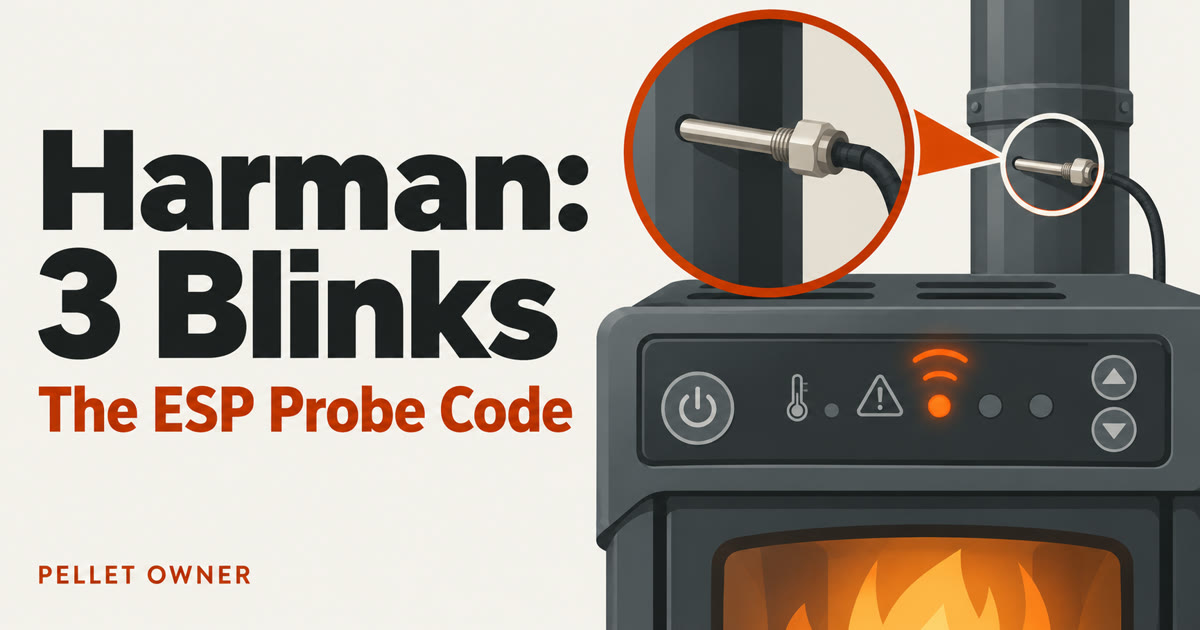
Three blinks on a Harman status light points to the ESP (exhaust probe). What it means on P43/P61 boards, the causes in order, and what's safe to check.
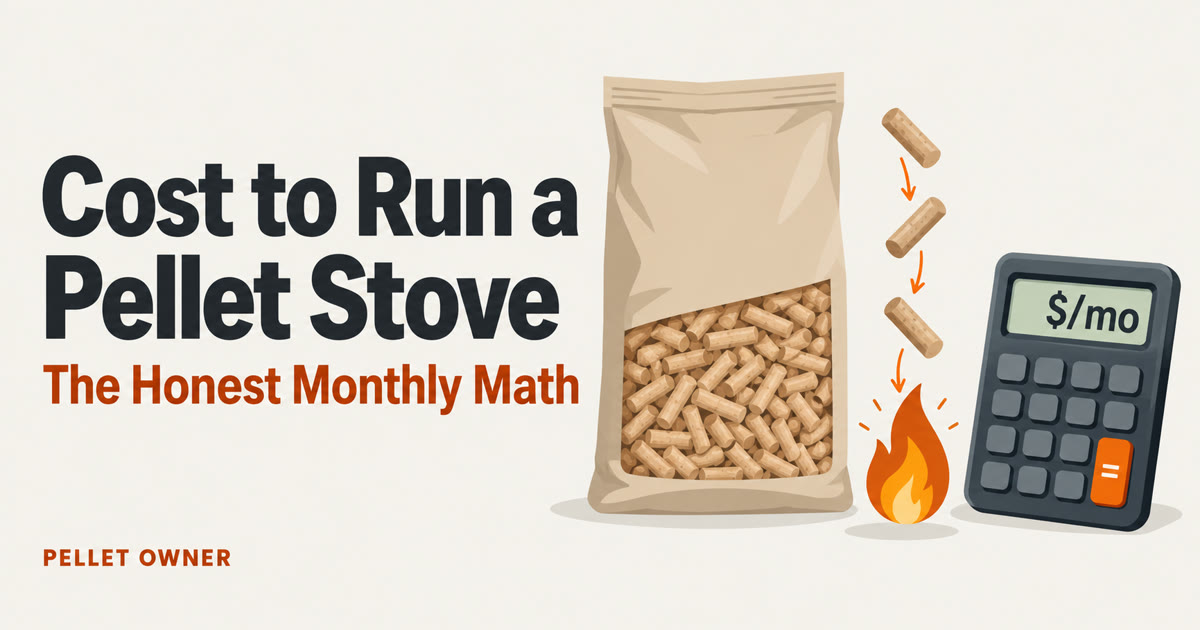
Primary heat in winter works out to roughly $150–$360 a month in pellets at today's bag prices. The transparent formula — bags/day × bag price + electricity — and how to measure yours.
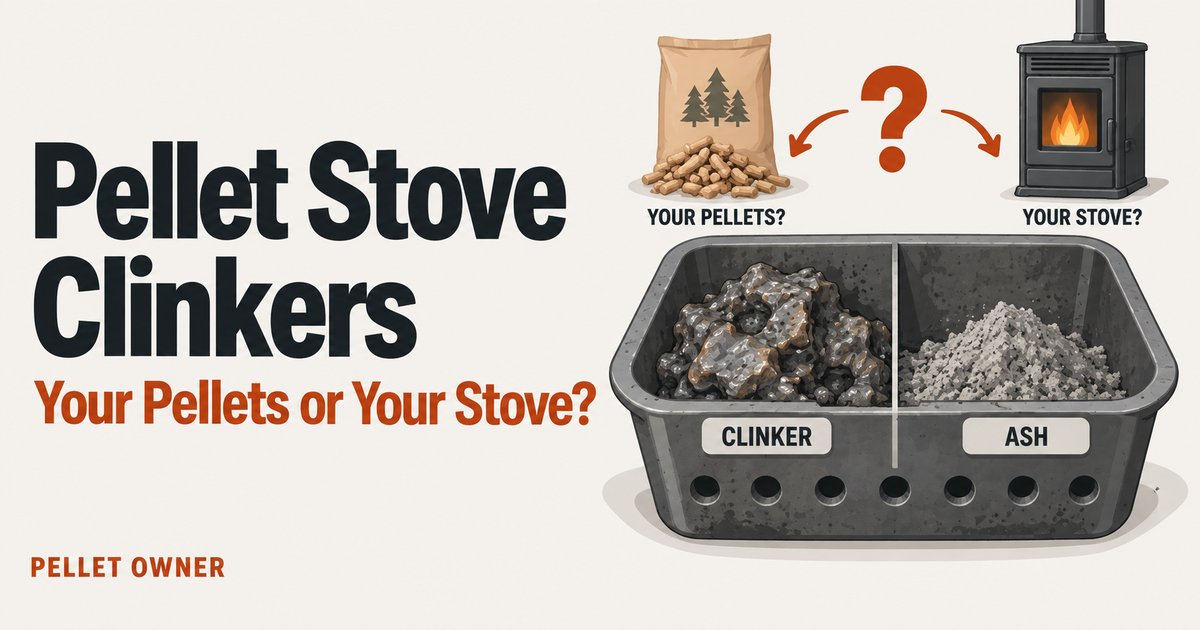
What a clinker really is, how to tell if it's caused by your pellets or your airflow, and a prevention checklist by cause — not just "buy better pellets."
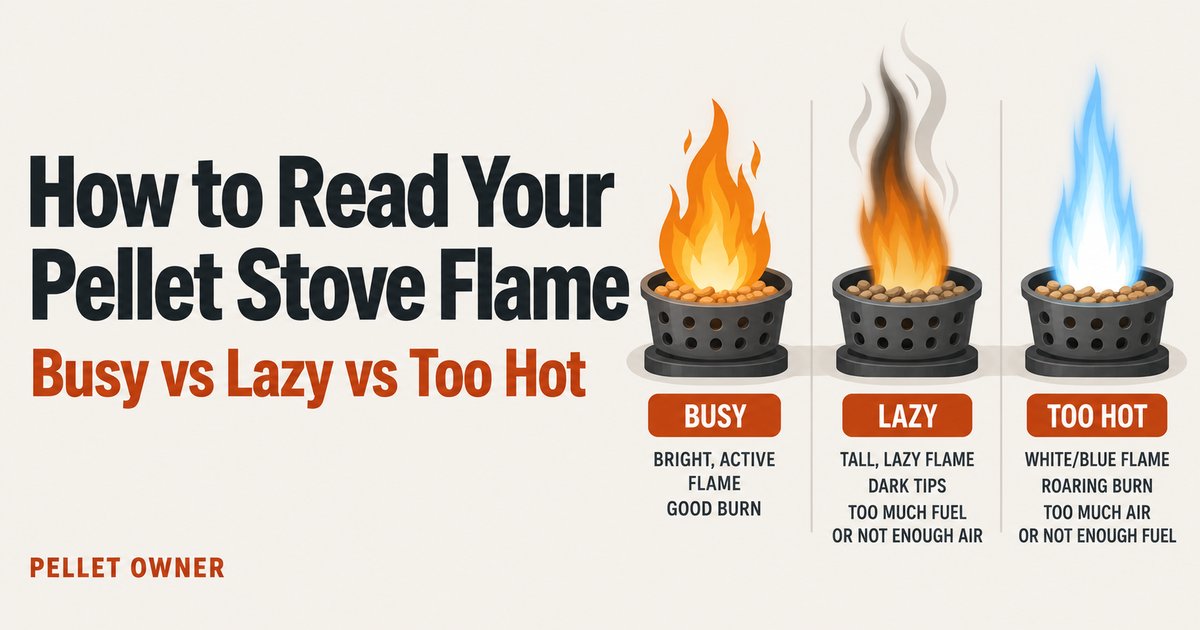
A bigger flame isn't more heat. See busy, lazy, and too-hot flames in plain words, learn whether a tall flame means low air or overfeeding, and how to adjust it.
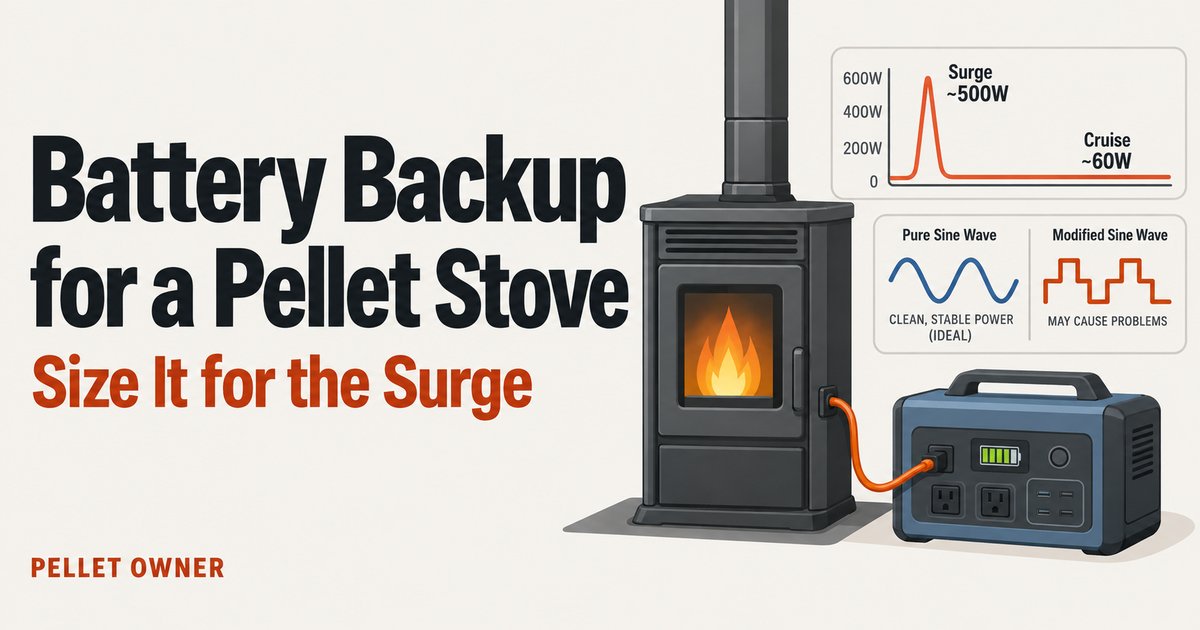
A pellet stove needs power for the auger and blowers. How many watts it pulls, why pure sine wave matters, and which UPS or power station fits.
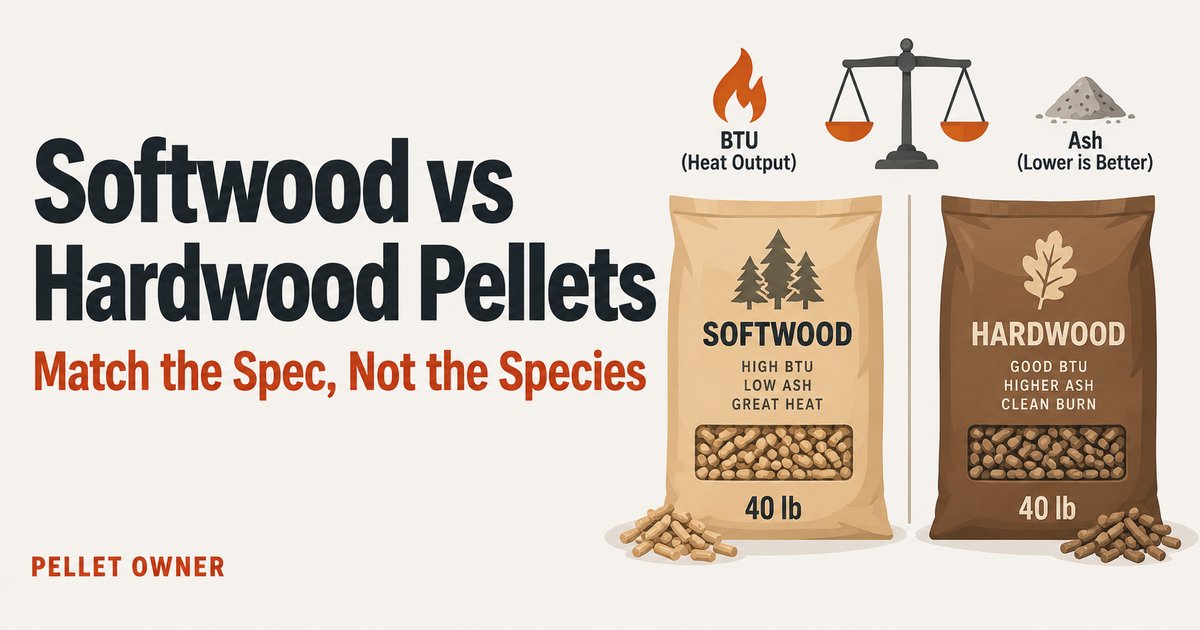
Why the firewood rule flips with pellets, what the BTU and ash numbers really say, and the buying rule that beats the label: match your stove's spec.
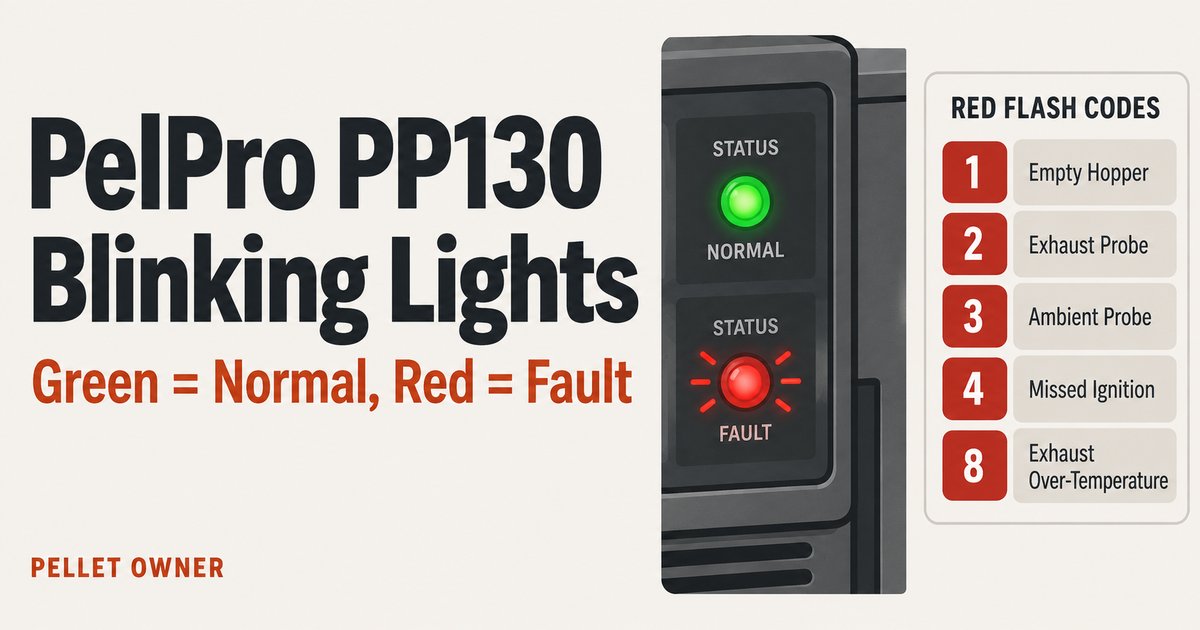
Every PelPro PP130 color and flash code — clearing up the green-blink mix-up and the missed-ignition checklist — decoded straight from the manual.
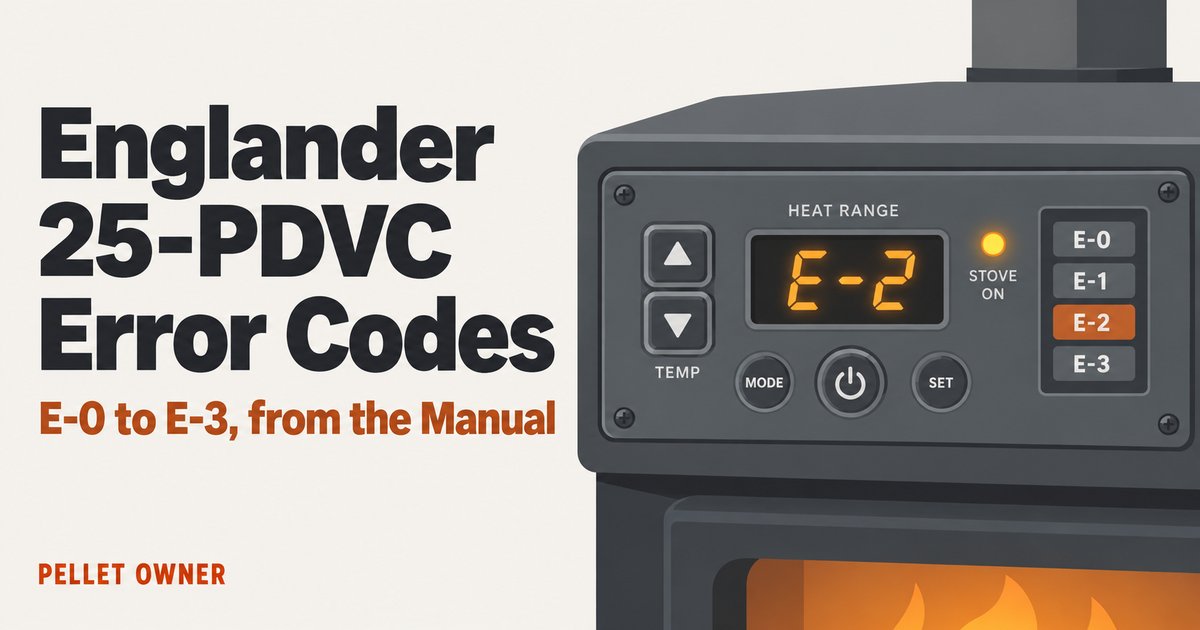
The E-codes on the SBI-built Englander 25-PDVC and 55-SHP10 — what each means, the likely cause, and how to reset, verified against the manual.
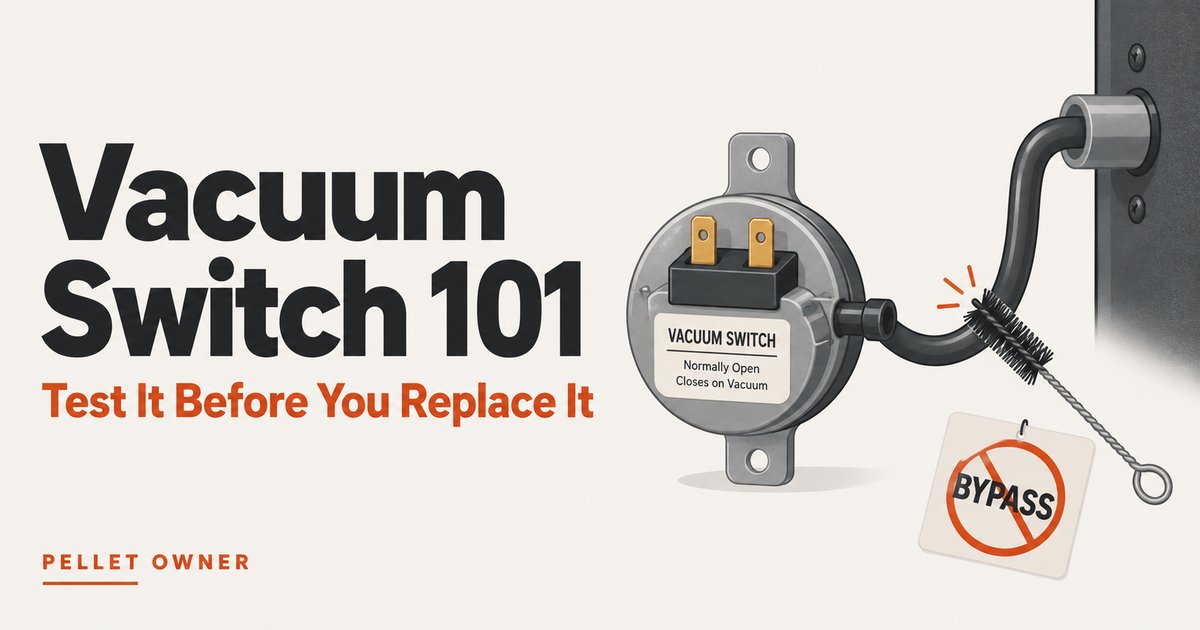
What the vacuum switch does, the 5-minute tube check, why you should never bypass it, and why it's usually not even the switch.
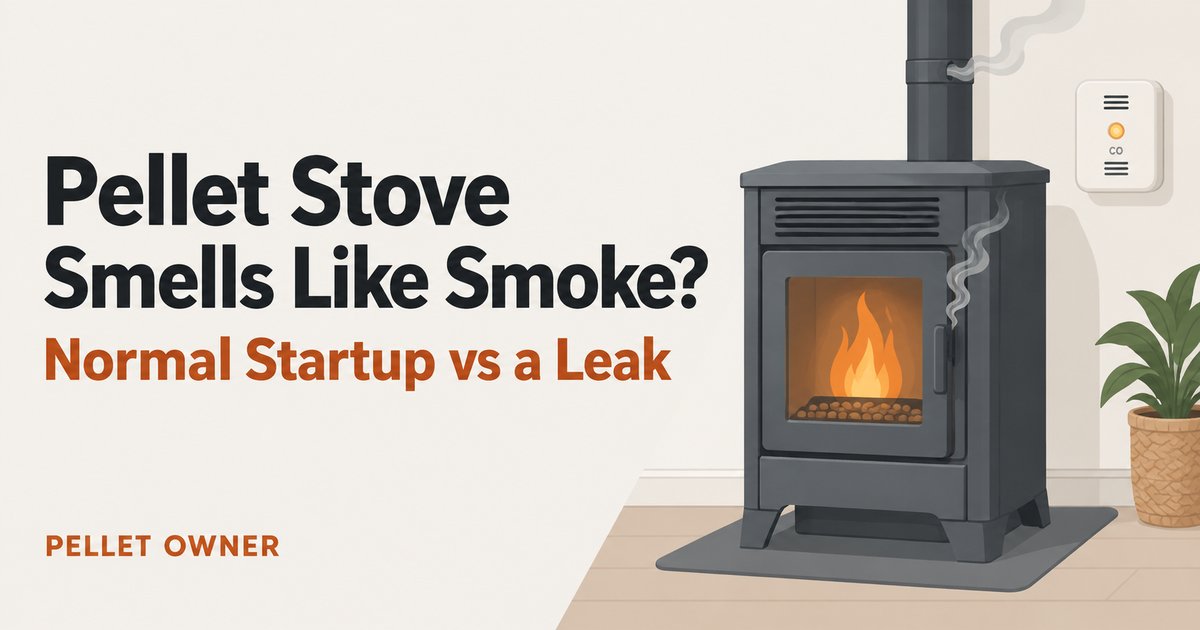
When a smoke smell means a quick gasket fix and when it means stop using the stove. How to find the leak, the carbon-monoxide warning signs, and when to call a pro.
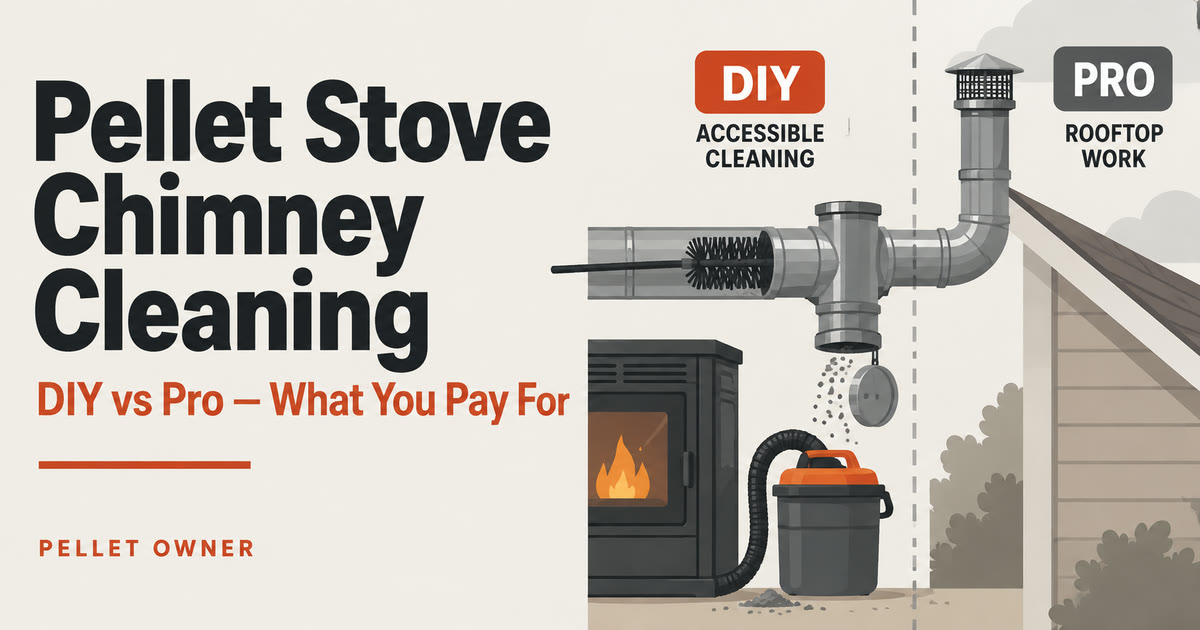
What a $150–$350 professional sweep actually covers, which parts of the vent you can safely clean yourself, and when the pro visit is non-negotiable.
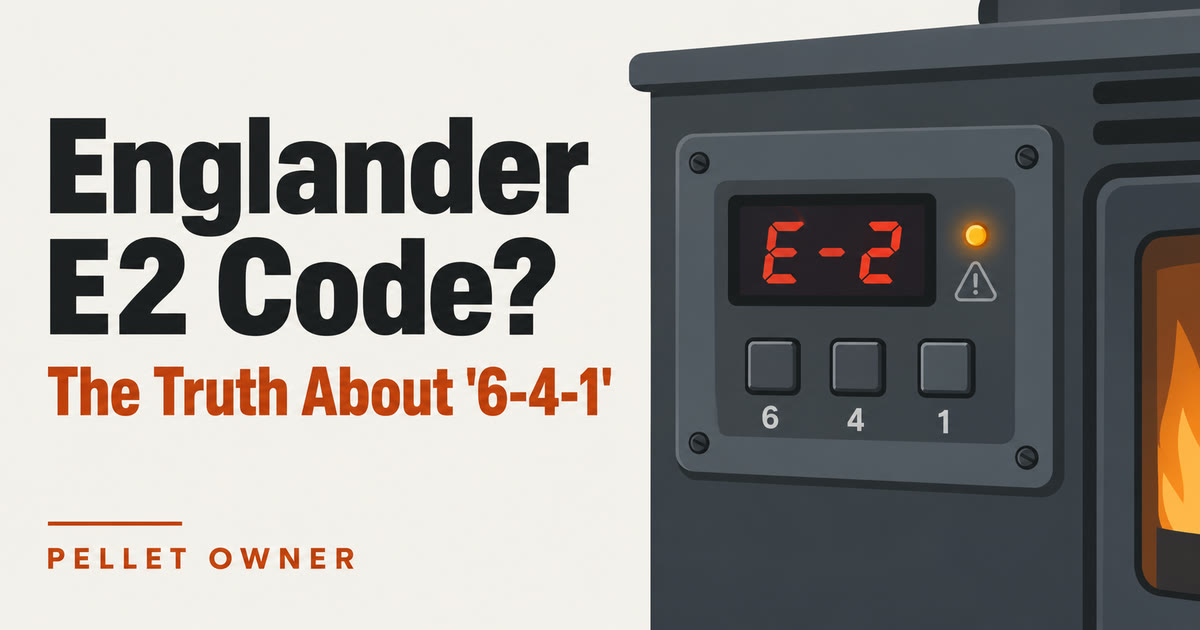
What E2 really means on a classic Englander 25-PDV, why the forums say '6-4-1,' what the manual actually says about those buttons, and the 5–9 mix-up.
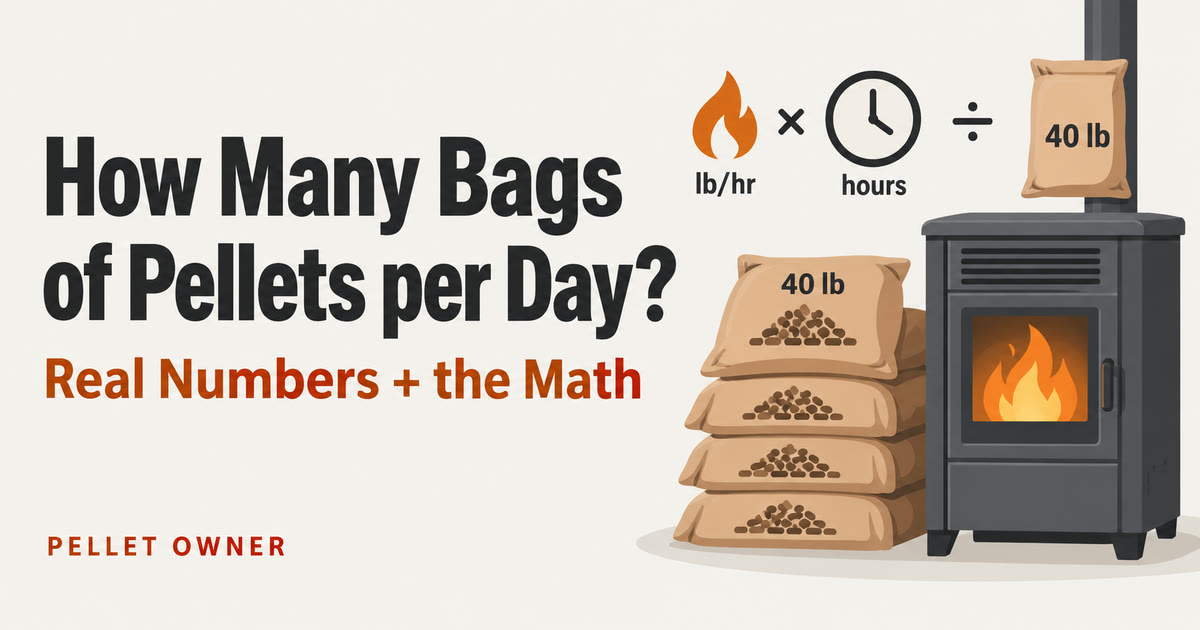
Most stoves burn ½ to 2 bags a day. The math behind it, estimates by home size and climate, and how to measure your own rate before ordering tons.
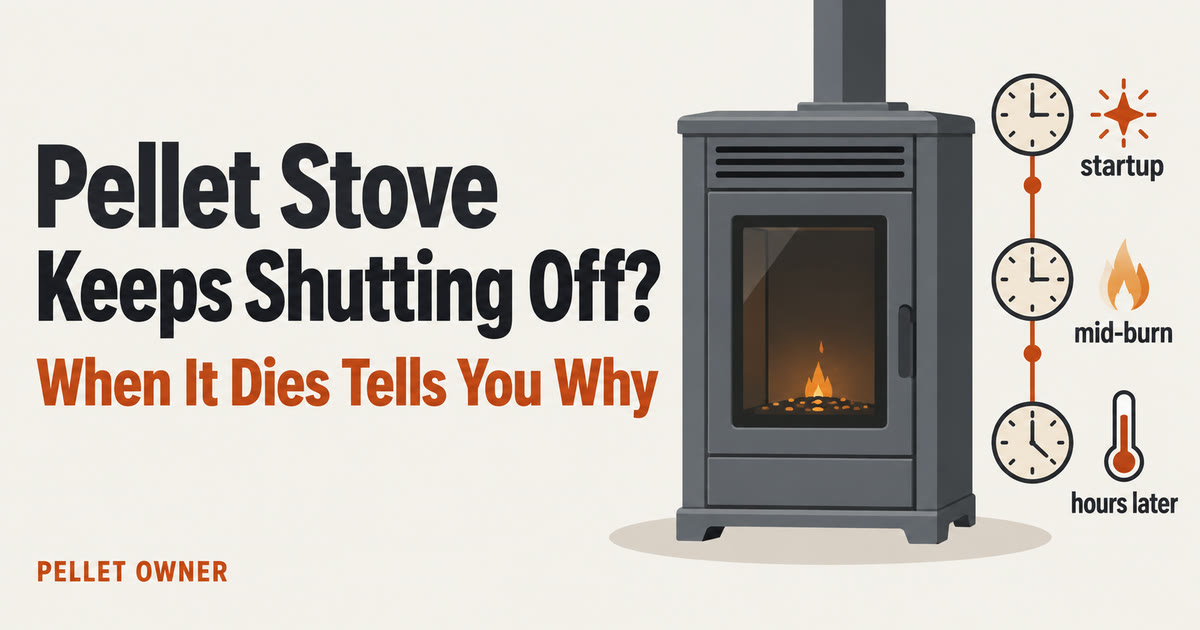
Dies at startup, mid-burn, or hours in? Each pattern points to different parts — proof of fire, vacuum switch, or an overheat safety. Diagnose by timing.

Track pellets burned and the calendar — your manual sets the minimum. Full checklist from burn pot to hidden smoke passages, plus a safe leaf blower trick.

The missing master table for Harman blink codes: what each blink count means on P43/P61 boards, what to check first, and why your board's generation matters.

Many "dead auger" cases turn out to be a safety switch or pellet bridging — free fixes. Triage yours in 60 seconds before ordering a motor.

Most ignition failures are ash, airflow, or position — not a dead igniter. Run this ordered checklist with real tests before you spend a dime.
Won’t light, keeps shutting off, smoke smell in the house — diagnosis by symptom, what’s safe to check yourself, and when to call a pro.
Blink codes and error codes by brand — Harman, Englander, PelPro, Comfortbilt and more — what they actually mean and what fixes them.
Cleaning schedules, gaskets, igniters, and the annual deep clean — keeping your stove burning clean, efficient, and safe.
What a pellet stove really costs to run — bags per day, tons per season, and how it compares to other ways of heating.