Pellet Stove Clinkers: Your Pellets or Your Stove?
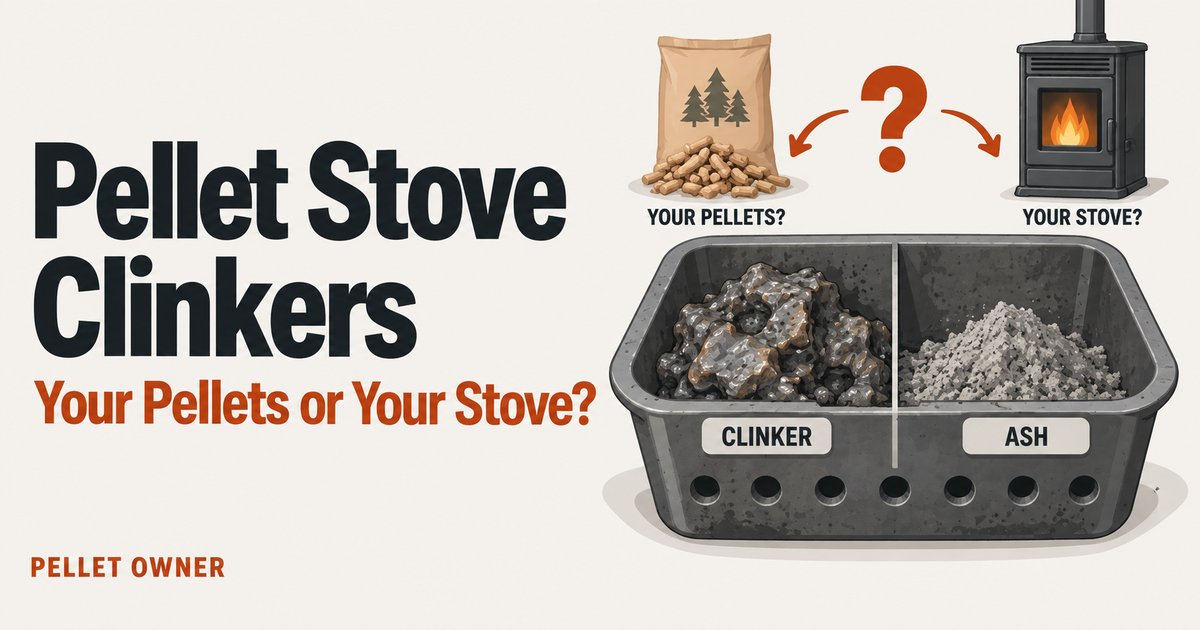
You open the stove to clean it and there it is in the burn pot: a hard, dark lump, half-fused to the grate, that a normal ash scoop just skids off. That’s a clinker, and the first thing most owners want to know isn’t the chemistry — it’s two very practical fears. Is this dangerous, is it wrecking my stove? And is this my fault for buying cheap pellets, or is something wrong with the machine?
Here’s the honest answer up front: a clinker itself is rarely dangerous, and it’s usually not a simple “buy better pellets” problem the way fuel sellers like to frame it. Clinkers are a symptom, and the fuel is only one of the causes. Let’s unpack what one actually is, then walk a ranked diagnosis so you can tell whether it’s your pellets or your stove.
What a clinker actually is
A clinker is ash that got hot enough to melt, then cooled and hardened into a glassy or rocky lump. Regular pellet ash is a fine, dry, gray powder. A clinker is the opposite — fused, heavy, sometimes shiny, and stuck to the burn pot or the grate.
The mechanism is something owners and stove shops have explained on the forums for years, and it lines up with the combustion research. Wood contains small amounts of minerals — silica, plus alkali metals like potassium, and traces of chlorine — that don’t burn off. In the concentrated heat of the burn pot, those minerals react and soften into a partly molten mixture; when it hits a cooler surface it re-solidifies into that glassy lump. A 2025 review in Frontiers in Energy Research on ash deposition in low-power biomass heaters describes the same process: at high temperature the ash partially melts and sinters, and as it cools it takes on glassy properties — the hard slag owners call a clinker. (Frontiers in Energy Research, 2025)
The part that matters for you: pure silica melts at a very high temperature, so it’s not the silica alone doing this. What lowers the melting point is the other stuff. The same body of research is consistent that alkali metals (potassium) and especially chlorine form low-melting compounds that slag far below where clean ash would — even small amounts of chlorine correlate strongly with worse slagging. In plain terms: the dirtier the fuel’s mineral content — bark, dirt, salt, contaminants — the lower the temperature at which it fuses, and the more clinkers you get. You don’t need to memorize a number; the takeaway is that clinkers are a fuel-plus-heat phenomenon, and both halves are things you can influence.
Clinkers vs. normal ash — and are they dangerous?
Quick field test, no lab required:
- Normal ash is powdery, light, and gray. It scoops and vacuums out. This is what you want.
- A clinker is a solid mass — dark gray to black, sometimes with a glassy or metallic sheen, hard enough to tap against the pot. It won’t vacuum up and often needs to be pried loose.
Are they dangerous? By themselves, no — a clinker isn’t going to hurt you and it isn’t a fire hazard sitting in the pot. The real risk is indirect: a clinker blocks the combustion air holes in the burn pot. Your stove depends on air pulled up through those holes for a clean, hot burn. Choke them and you get a lazy, sooty flame, poor heat, and eventually the stove struggling or shutting down on a safety — the same starved-air picture that can also leave a burn pot too clogged to light. (If yours is fighting to start, that’s the won’t-ignite territory.)
Will they damage the stove? An occasional clinker, removed gently, won’t. What causes damage is forcing it — prying hard on a cast grate or scraping with a screwdriver until something cracks. So the honest framing is: clinkers are a maintenance nuisance and a warning sign, not an emergency. But a stove that makes a big fused clinker every day is telling you something is off, and that’s worth diagnosing.
Is it the pellets or the stove?
This is the real question, and the answer fuel sellers give — “buy better pellets” — is only one of four causes. Here’s the ranked diagnosis, most-common first, with how to tell which one is yours.
| Cause | What you’ll see | The fix |
|---|---|---|
| 1. Too little combustion air | Lazy, tall, dark orange flame; soot on glass; clinkers form even with good pellets | Clean the burn-pot holes; check damper/air setting |
| 2. Dirty stove | Clinkers plus general ash buildup, sluggish heat, a stove overdue for a clean | Deep clean; clear ash from pot, passages, and blower |
| 3. Pellet quality | Clinkers track with one brand/bag; more ash overall; problem follows the fuel | Switch to low-ash, low-bark pellets |
| 4. Wet pellets | Crumbly or swollen pellets, dust, poor burn, clinkers after damp storage | Fix storage; discard fuel that got wet |
Start with air, not fuel. The single most common clinker cause isn’t bad pellets — it’s not enough combustion air, because the burn pot’s air holes are crusted over or the air/damper setting is too low. Starved air means a cooler, dirtier burn that leaves more unburned mineral residue to fuse. The tell: a flame that’s tall, lazy, and dark orange instead of short, bright, and active. Learning to read the flame is the fastest way to catch this — a hungry-looking fire is an airflow problem until proven otherwise. Pull the burn pot and check that every air hole is open.
Then rule out a generally dirty unit. If clinkers come alongside ash packed in the passages and a stove you can’t remember last deep-cleaning, the machine is the problem, not the bag. Ash insulating the pot and choking the air path recreates the starved-air condition even with decent fuel. A full deep clean often makes clinkers disappear on its own.
Now look at the fuel — but look specifically. The tell for a real pellet problem is that clinkers track with the fuel: one brand or one bad batch clinkers badly while another burns clean in the same stove, on the same settings. That’s your evidence it’s the pellets and not the machine. Pellets high in bark, fines, or dirt carry more of the silica-and-chloride mineral load that fuses low.
Finally, moisture. Pellets that absorbed humidity — stored in a damp garage or on a bare concrete floor — burn poorly and can clinker. If your fuel is crumbly, dusty, or swollen, that’s the cause, and it’s on storage, not the stove.
So: flame and air first, cleanliness second, fuel third, moisture fourth. If you’ve got a bright, active flame, a clean stove, and dry pellets and you still get clinkers from a specific bag — now it’s fair to blame the pellets.
The pellet connection
Even when air and cleanliness are right, fuel choice moves the needle, and this is where clinkers and the softwood vs. hardwood question meet directly.
The driver isn’t wood species by name — it’s ash content and what’s in the ash. Pellets made with more bark, more fines, or dirt picked up in manufacturing carry more of the exact minerals — silica, alkalis, chlorides — that fuse into clinkers. Bark in particular is a notorious source. That’s why you’ll see owners report the same stove clinkering on a cheap “utility” pellet and running clean on a premium one: it’s not magic, it’s the mineral load. This is the one place the fuel sellers are half-right — low-ash, clean pellets genuinely clinker less. The full breakdown of ash grades and species is in the softwood vs. hardwood pellets guide; the short version for clinkers is: buy on the ash number, not the species label. If you’re tempted by grill or bedding pellets, read what your manual actually allows first. A low-ash softwood will usually clinker less than a bark-heavy hardwood, whatever the marketing says. (Higher ash also means more frequent cleaning and, over a heating season, more scooping.)
How to prevent clinkers — by cause
Match the fix to the cause you found above:
- Airflow (do this first). Keep the burn-pot air holes clear — scrape them every time you clean, not just when they look bad. If your stove has an adjustable air/damper setting and you’re getting a lazy flame, open it up a notch. A bright, active fire is your prevention baseline.
- Cleaning cadence. Stay on your manual’s cleaning schedule — and check it, because they genuinely differ by model (some by days of use, some by tons burned). A pot cleaned on schedule doesn’t get the crust that starves air. Use the deep clean checklist for the full routine.
- Fuel. Buy low-ash pellets and favor clean, low-bark fuel. If a particular bag clinkers, note the brand and don’t rebuy it. Buying a single bag to test before committing to a ton is cheap insurance.
- Storage. Keep pellets dry — sealed bags, off a bare concrete floor, out of a damp garage or shed. Dry fuel burns hotter and cleaner and clinkers less.
How to remove a clinker safely
When you find one, don’t fight the stove while it’s running. Do this cold:
- Shut the stove down from its controls, let it go completely cold, and unplug it. A clinker in a hot pot is not worth a burn or a rushed job.
- Empty the loose ash around it first so you can see what you’re dealing with.
- Work the clinker loose gently. A burn-pot scraper or a sturdy putty knife, easing it free — not a hard pry against a cast grate. Don’t force the grate; if a clinker is welded on, more patience, not more force. Cracking the pot or grate turns a $0 nuisance into a parts order.
- Vacuum out the debris with an ash vacuum — a metal-canister vac rated for fine ash, never a household vacuum (fly ash blows straight through the filter, and a stray ember is a fire risk) — and the debris goes in a lidded metal can, handled like live ash.
- Confirm every air hole in the pot is clear before you relight. That’s the step that stops the next clinker.
If clinkers keep coming back after you’ve cleared air, cleaned the stove, and tried better pellets, that’s the point to bring in a certified NFI technician — persistent clinkering with everything else right can point to a combustion or air-delivery issue that’s beyond routine owner maintenance.
FAQ
What causes clinkers in a pellet stove? Ash minerals — silica, plus alkalis and chlorides from bark and contaminants — melting in the concentrated heat of the burn pot and hardening into a lump. The most common trigger isn’t bad fuel, though: it’s too little combustion air from a crusted burn pot or low air setting, which makes a cooler, dirtier burn that fuses more residue.
Are clinkers from bad pellets or the stove? Both are possible, so diagnose in order: airflow first (lazy flame, clogged air holes), a dirty stove second, pellet quality third, wet pellets fourth. The tell for a real fuel problem is that clinkers follow the bag — one brand clinkers, another burns clean in the same stove on the same settings.
Do hardwood pellets cause more clinkers? It’s less about hardwood vs. softwood and more about ash content and bark. High-ash, bark-heavy pellets clinker more regardless of species. Buy on the ash number, not the species label — see the softwood vs. hardwood guide.
Are clinkers dangerous? The clinker itself isn’t. The risk is that it blocks the burn pot’s air holes and starves the fire, causing a poor burn or a shutdown. And forcing one out can crack the grate. Remove them gently with the stove cold and unplugged.
How do you remove a clinker from a burn pot? Shut the stove down, let it cool completely, and unplug it. Empty the loose ash, ease the clinker free with a scraper (don’t force the grate), vacuum with an ash vacuum, and make sure every air hole is clear before relighting.
What’s the difference between a clinker and normal ash? Normal ash is fine gray powder that scoops and vacuums out. A clinker is a hard, fused, often glassy lump that’s stuck to the pot or grate and won’t vacuum up.

Walt Hensley — Walt Hensley is the pen name of Pellet Owner’s editor. I’m not an NFI-certified technician, and I don’t sell stoves, pellets, or parts. Every guide here starts from the manufacturers’ owner’s and service manuals, is cross-checked against what owners consistently report, and says which is which — including what you can safely check yourself and when it’s time to call a certified technician.